Can't hear your doorbell? 8 fixes from $0 to $50
By Qoorbell Team
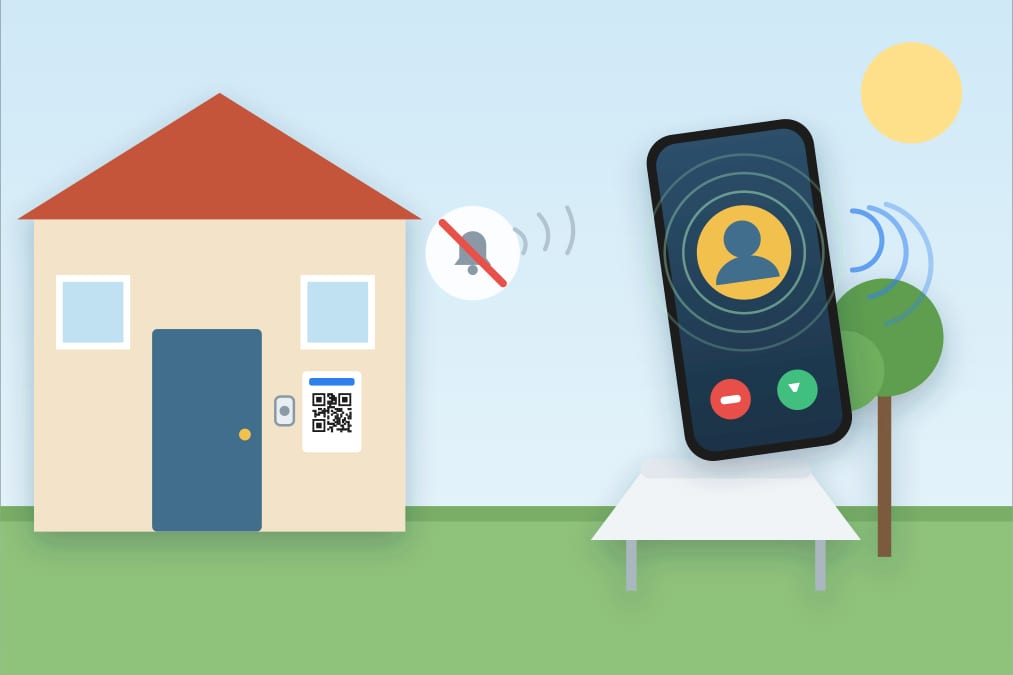
If you can't hear the doorbell from the backyard, garage or basement, bring the ring to you: get the most out of the chime you have, add a receiver where you spend time, or have your phone ring when someone is at the door. Most of these fixes cost between nothing and about $50.
Find your situation in the diagnosis table, then work through the 8 fixes, ordered by cost. If a missed ring has already cost you a package, see what to do when the delivery driver didn't ring.
Where are you when you miss the doorbell?
| Where you are | Why you miss it | Best fix (by number) |
|---|---|---|
| Backyard or patio | The chime is indoors, behind closed doors. | 3, 5, 7 |
| Garage or workshop | Tool or engine noise, and a heavy door between you and the chime. | 3, 5, 8 |
| Basement | Floors and concrete walls block both sound and wireless signals. | 2, 3, 6 |
| Upstairs or a far room | The chime is downstairs, and a closed door is enough to block it. | 1, 2, 5 |
| Shower, vacuum or headphones | Noise drowns the chime out, or your ears are covered. | 3, 4, 7 |
| Hard of hearing | High tones are often the hardest to hear, and one chime in one room is easy to miss. | 8, 7, 3 |
8 fixes, from free to about $50
Prices are approximate US retail ranges and change often.
1. Check the chime you already have
Cost: $0 · Effort: 10 minutes · Best for: a chime that got quieter
Most wired "ding-dong" chimes have no volume control: a small plunger strikes metal bars, and that is as loud as it gets. Check that nothing touches the bars or muffles the chime. A buzz or a weak sound can mean a worn chime or a weak transformer.
Wireless and electronic chimes usually have a volume button and several tones, so pick a longer melody at a higher setting. A weak battery in the outdoor button also shortens the range, so replace it.
2. Move the receiver or clear its path
Cost: $0 · Effort: 15 minutes · Best for: wireless chimes that ring only sometimes
A plug-in receiver works best in a central outlet, out of cabinets and away from metal appliances. Move it toward the place where you usually miss the bell, say, by the back door. Every wall between the button and the receiver shortens the range.
If the chime rings only some of the time, change the channel or code if your kit has one. With a wired chime the free fix is about sound: leave the hallway or basement door open.
3. Let your phone ring with a QR doorbell
Cost: $0 (free plan) · Effort: about 5 minutes · Best for: backyard, garage, basement and headphones
This fix skips the chime and rings your phone instead. With Qoorbell you create a doorbell in the app or on the web in about 30 seconds, print the poster it generates and stick it next to your existing button. A visitor scans the QR code with their phone camera, a page opens in the browser with no app or account, and your phone rings with a video call or a chat. The call goes over the visitor's own mobile data, and they never see your number.
Your phone goes where you go: the yard, the garage, the basement or work, as long as it has internet. Share the doorbell with your household and several phones ring at once. The free plan has time-limited video calls and ads; optional paid plans add longer calls and extras. Create your free doorbell and keep the old one beside it.
4. Check the smart doorbell alerts you already have
Cost: $0 if you own one · Effort: 5 minutes · Best for: homes with a video doorbell
With a video doorbell, the weak link is often your phone. Check that its app is allowed to send notifications, that Do Not Disturb is not silencing them and that the alert sound stands out. Many systems can also ring an add-on chime or a smart speaker.
If you are shopping for one, most need a solid Wi-Fi signal at the door and often a monthly plan for recordings. Compare the video doorbell alternatives without a monthly fee first.
5. Add a plug-in chime receiver
Cost: about $15–$35 · Effort: 5 minutes · Best for: a garage, basement or patio with an outlet
A wireless doorbell kit is a battery-powered button plus a receiver that plugs into any outlet. Many kits include two receivers, so one can go in the garage and one by the patio door. Most have adjustable volume and several tones, and some also flash.
The catch: extra receivers usually pair only with buttons from the same brand, and they won't pick up a wired doorbell without an extender (fix 6). Our wireless doorbell buying guide explains what to look for.
6. Use a doorbell extender or a second wired chime
Cost: about $15–$50 · Effort: 15 minutes, more for wiring · Best for: keeping your wired doorbell
A doorbell extender keeps your wired button and sends each ring to one or more wireless receivers. The transmitter either connects to the doorbell wiring or sits next to the chime and listens for it. Check the compatibility list first, especially if a video doorbell shares the wiring.
Extenders run about $20–$50. A basic second wired chime costs about $15–$30, but it needs a new cable from the existing chime or transformer, and two chimes may need a stronger transformer. Unless you are comfortable with low-voltage wiring, budget for an electrician.
7. Carry a portable receiver
Cost: about $15–$40 · Effort: 5 minutes · Best for: moving around the house and yard
A portable receiver is a battery-powered or rechargeable chime you carry from room to room, set on the patio table or, with some models, clip to a belt. Some also vibrate or flash, which helps when you have headphones on. Rechargeable ones usually charge over USB.
It has to pair with a compatible button or extender, and the range shrinks behind several walls or at the end of a long yard, so test it first.
8. Add a loud bell or a flashing strobe
Cost: about $15–$50 · Effort: 10–30 minutes · Best for: garages, workshops and the hard of hearing
For noisy spaces, choose a receiver sold as loud (many list up to about 100–110 dB at the top setting) or one with a strobe that flashes a bright light at every ring, so you notice it over a saw or the TV. Strobe receivers are a common choice for people who are hard of hearing.
The outdoor button is usually weatherproof, but the receiver often is not, so keep it in a dry spot. Like any receiver, it needs a matching button or an extender.
Comparison at a glance
| Fix | Cost | Works in backyard/garage | Needs Wi-Fi | Needs installation |
|---|---|---|---|---|
| 1. Check the chime | $0 | Rarely | No | No |
| 2. Move the receiver | $0 | Sometimes | No | No |
| 3. QR doorbell on your phone | $0 (free plan) | Yes, anywhere your phone has internet | No; your phone needs data or Wi-Fi | No, a printed poster |
| 4. Smart doorbell alerts | $0 if you own one | Yes, on your phone | Yes, at the door | Already installed |
| 5. Plug-in receiver | About $15–$35 | Yes, near an outlet | No | No, plug it in |
| 6. Extender or second chime | About $15–$50 | Yes, within range | No | Light (extender) or wiring (chime) |
| 7. Portable receiver | About $15–$40 | Yes, within range | No | No |
| 8. Loud bell or strobe | About $15–$50 | Yes, built for it | No | Light |
How to set up the free phone option in 5 minutes
- Create the doorbell. Do it in the Qoorbell app or on the web; it takes about 30 seconds.
- Print the poster. It carries your QR code. If rain can reach it, use a plastic sleeve.
- Place it next to your existing button. Put it at eye level with the "scan to ring" message clearly visible.
- Install the app and allow notifications. Get it on Android or iPhone and say yes to notifications so the ring can reach you.
- Share it with your household. Invite the people you live with so every phone rings. Then go out to the garage and have someone scan the poster to test it.
This is a complement, not a replacement: the old chime keeps working for anyone who presses the button.
When the phone option is not the right fix
- The visitor needs a phone and has to notice the poster. Without a smartphone with a camera and internet, they cannot ring this way.
- Drivers in a hurry press the button or knock. Many delivery drivers and older visitors still do, which is why the poster goes next to your doorbell, not instead of it.
- Your phone needs internet and sound. On silent or Do Not Disturb, the ring follows your phone's own settings.
- It does not watch your porch. There is no camera at the door, and nothing is recorded when nobody rings. If you want footage of package drop-offs, you need a camera.
Frequently asked questions
Can I make my existing doorbell louder?
Wireless and electronic chimes usually have a volume setting and several tones. Most mechanical wired chimes have no volume control, so bring the sound closer instead with an extra receiver, an extender or a second chime.
What is a doorbell extender and does it work with wired doorbells?
It is a small wireless transmitter that relays your doorbell's ring to plug-in or portable receivers elsewhere in the house. Wired doorbells are what it's made for: the transmitter either connects to the doorbell wiring or sits next to the chime and listens for it. Before buying, check that it supports your type of chime.
How far does a wireless doorbell reach?
Packaging usually quotes anywhere from about 100 to 1,000 feet, measured in open air. Each wall or floor reduces that, and brick, concrete and metal much more; a common rule of thumb is roughly 20% less per ordinary wall. Choose a model rated well beyond the distance you need.
Can my phone ring when someone is at the door without a smart doorbell?
Yes. A QR doorbell puts no device at the door: the visitor scans a printed code and your phone rings over the internet. Here is how a video doorbell without Wi-Fi or wiring works.
What can I do if I'm hard of hearing?
Use more than one sense: a strobe receiver that flashes, a portable receiver that vibrates, and phone alerts, since most phones can vibrate and many can flash the screen or camera light through their accessibility settings.
The bottom line
Most people who miss the doorbell don't need a new one; they need the ring to reach them. Start with the free checks, then choose between the ring on your phone, a receiver where you are, or a light you can see. For many homes, the sensible mix is the old chime, the free phone option and one receiver where you most often miss the bell.
- can't hear doorbell in backyard
- doorbell extender
- portable doorbell receiver
- hear doorbell anywhere in house