Someone Hit My Parked Car: What to Do in the First Hour
By Qoorbell Team
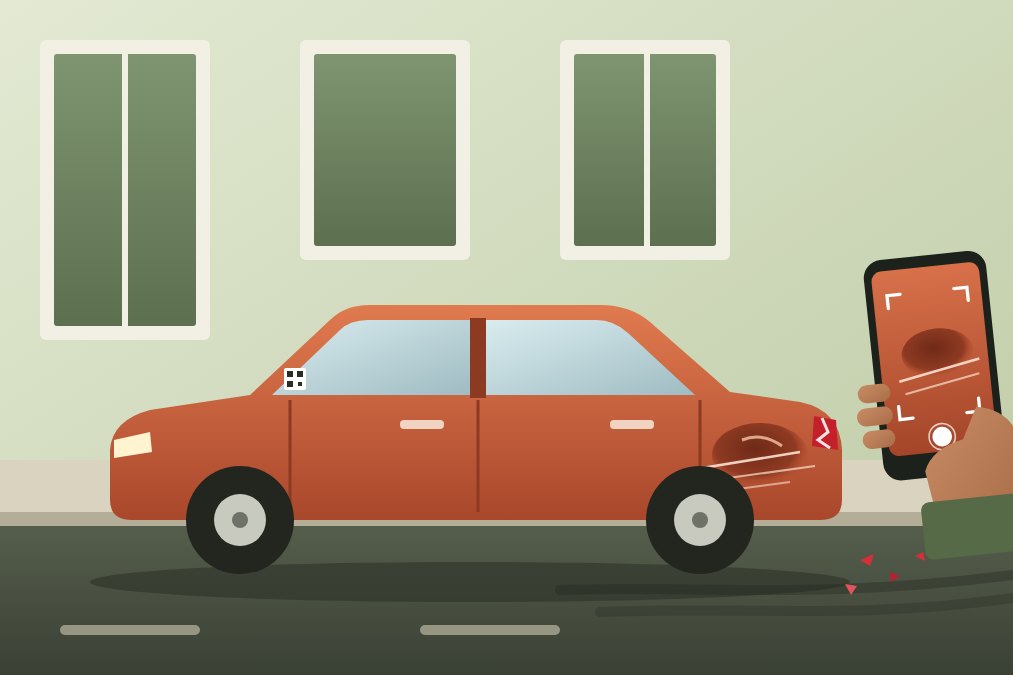
If someone hit your parked car and left, stay calm, check for a note, photograph the damage and the scene, look for witnesses and cameras, and report it to the police and your insurer as soon as you can. The first hour matters most, because that is when evidence is easiest to find.
This guide walks you through what to do right away, how to document the damage, how to find the other driver, and what usually happens with the police and the insurance. At the end you will find a simple habit that gives an honest driver an easy way to reach you next time.
What to do right away when someone hits your parked car
Finding a dent or a broken light on a car you left in one piece is upsetting. Take a breath and go through these steps in order.
- Check that it is safe. If the car is in a busy street or the damage left glass or fluid on the ground, think about your safety before anything else.
- Look for a note. Check the windshield, the side windows and under the wipers. Some drivers do leave their details, and wind or rain can move a note.
- Do not move the car yet. If you can, take your photos first. The position of the car and any debris tell part of the story.
- Photograph everything. The damage close up and from a distance, the whole car, the parking spot, the street sign or parking row, and any paint marks or broken pieces nearby.
- Ask around. People in nearby shops, a parking attendant, a security guard or neighbours may have seen or heard something.
- Look for cameras. Shops, car parks, homes and other parked cars often have cameras. Ask politely and quickly, because many systems record over old footage after a few days.
- Report it. In many places a hit-and-run should be reported to the police, and many insurers ask for a report number before they handle the claim.
How to document the damage properly
Good evidence makes everything easier: the police report, the insurance claim and any talk with the other driver if they turn up later.
- Time and place. Write down when you parked, when you found the damage and the exact address or level and row of the car park.
- Wide and close photos. Wide shots show where the car was; close shots show scratches, dents and paint transfer. Paint of another colour can hint at the other car.
- A short video. Walk around the car slowly while recording. It shows the whole picture in one file.
- Witness details. Name and a way to contact each witness, and what they saw, in their own words, written down the same day.
- Receipts. Keep every repair quote, towing receipt or rental receipt in one folder.
Finding the driver: witnesses, cameras and notes
Many drivers who hit a parked car do not mean to run away. Some do not notice, some panic and some simply cannot find the owner. That last group is bigger than you might think: in a car park there is nobody to ask and leaving a phone number on a scrap of paper does not feel safe to everyone.
Camera footage is often the best lead. A clear view of a number plate gives the police and your insurer something to work with. If a shop or a building has footage, ask them to keep a copy and tell the police where it is; the police can usually request it formally.
If you find out who the driver is, keep the conversation calm and short, exchange details and let the insurers handle the rest. Avoid arguing in the car park, and do not agree to anything you are unsure about on the spot.
Police report and insurance: what usually happens
Rules differ by country and by policy, so read your own policy or call your insurer. In general, things go like this:
- The police report records the incident and gives you a reference number. Some places let you file it online for damage only.
- Your insurer asks for the date, place, photos, the report number and any witness or camera details.
- If the other driver is found, their insurance usually pays for the damage they caused.
- If the driver is never found, what you get depends on your cover. Some policies pay hit-and-run damage, sometimes with an excess; others do not.
- Small damage may cost less to repair than your excess. Get a quote before deciding whether to claim.
This is general information, not legal advice. If the damage is serious or someone was hurt, talk to the police and a professional where you live.
Make it easy for an honest driver to reach you
The most frustrating part of a hit-and-run is that some of those drivers would have contacted you if they could. You can give them a way to do it without putting your phone number on the dashboard for everyone to see.
Qoorbell turns a printed QR code into a doorbell for your car. In the app's own words, a vehicle doorbell is: "A car, a van, a motorcycle. A QR behind the windshield; whoever needs you scans it and reaches you — without seeing your number." The person scans the code with the phone camera, a web page opens with no app and no account, and they can video-call or chat with you. You get the alert on your phone, wherever you are.
That same QR helps in other moments too: a driver whose exit you block, a neighbour who sees your lights on, or someone who notices a flat tyre. If you were the one boxed in, our guide on what to do when someone blocks your car covers that side of the story. And if people around you are not used to scanning codes, this step-by-step guide to scanning a QR code is easy to share.
What to keep in mind
A QR code on the windshield does not stop anyone from hitting your car, and it cannot make a driver who wants to leave stay. It only removes the excuse that there was no way to reach you, and it gives honest people an easy option.
- It needs the other person's phone to have a camera and a connection, and yours to be online to receive the call or chat.
- It does not replace the police report, the photos or the insurance claim. Do those steps anyway.
- If you miss the call, the person can leave you a chat message, so check your history when you get back to the car.
- Place the code where it can be seen from outside but does not block your view, for example in a lower corner of the windshield.
Frequently asked questions
Should I call the police if someone hit my parked car?
In many countries you should report a hit-and-run, and insurers often need the report number. If someone is hurt or the car blocks traffic, call the emergency number.
How long do I have to report it?
It depends on where you live and on your policy. The safest choice is to report it the same day, while evidence and camera footage still exist.
Will the other driver see my phone number if they scan my car's QR?
No. With Qoorbell the person only sees the doorbell name, never your phone number or other personal details.
Does the person who scans need an app?
No. They point the phone camera at the code and a web page opens. Only you, the owner, use the Qoorbell app or website.
Turn a bad day into a quick claim
Check for a note, take your photos, ask for witnesses and cameras, and report it early. Those steps give you the best chance of finding the driver and getting the repair paid. And so the next honest driver can reach you in a second, create your car's free QR code and put it on the windshield today.
- someone hit my parked car
- hit and run
- car insurance
- QR doorbell