Doorbell for Elderly Parents: 5 Options and a Safer Door Rule
By Qoorbell Team
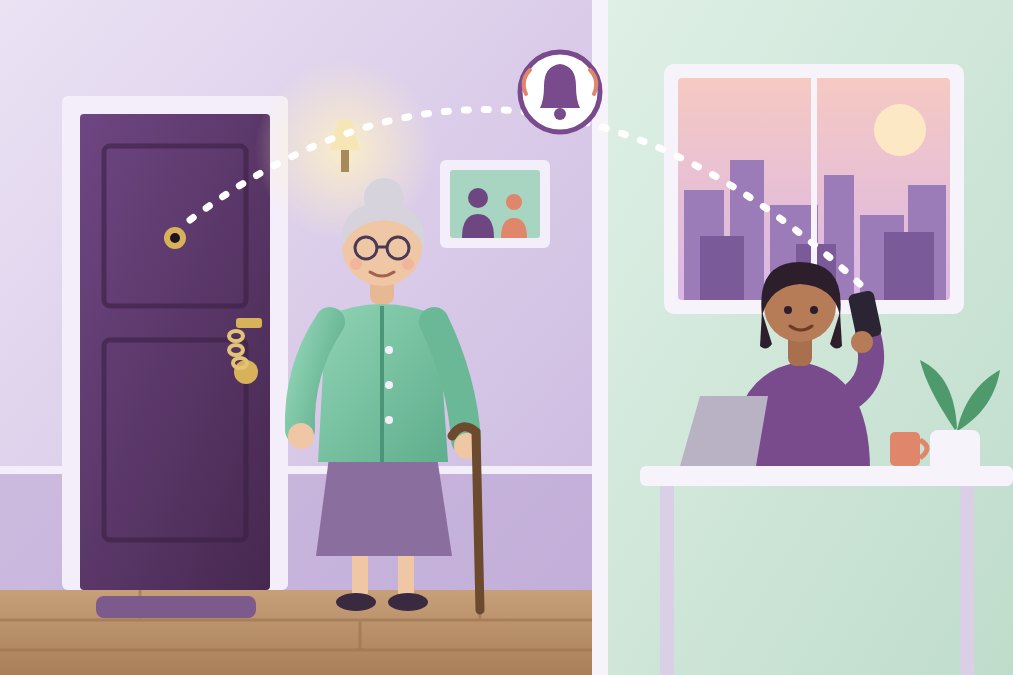
The best doorbell for elderly parents is one they can notice without rushing to the door, that lets them talk to a visitor before opening, and that lets you, the family, see and answer who rings when they cannot.
Answering the door gets harder with age. The bell is easy to miss, the walk down the hall takes longer, and the person outside is not always who they claim to be. This guide covers what to look for, five realistic options, a simple setup you can do in one afternoon, and a door rule that keeps your parent safer without making them feel watched.
Why the front door gets harder with age
For many older people, the front door is where three small problems meet.
The first is hearing. Hearing often fades with age, high tones first, and a classic chime is a high tone. A parent in the back bedroom or the garden may simply not hear it.
The second is moving. Getting up quickly from a chair to reach the door before the visitor leaves is the kind of hurry that leads to a stumble. Couriers do not always wait long.
The third is trust. Older people living alone are a frequent target of people who knock with a story: a fake meter reader, an urgent repair, a parcel that needs a payment. Opening first and asking questions second is the habit that makes those stories work.
A good doorbell setup solves all three: a signal they notice, time to answer calmly, and a way to talk before the door opens.
What a good doorbell for elderly parents should do
Before comparing products, agree on what the doorbell has to achieve in your parent's home. A useful checklist:
- Easy to notice. Loud enough, or with a light or vibration, in the rooms where your parent actually spends the day.
- Talk before opening. Your parent can see or speak with the visitor without unlocking anything.
- No hurry. If they are slow to answer, the visitor can still leave a message instead of walking away.
- Family in the loop. A son, daughter or neighbour can also receive the ring and answer it.
- Simple to use. No new remote, no small buttons, nothing to charge every week.
- Nothing hard to install. Especially in a rented flat or a home where drilling and wiring is a project nobody will finish.
5 doorbell options for older parents, compared
There is no single right answer. Most families end up combining two of these.
- A louder plug-in chime. A wireless bell with a plug-in receiver that has adjustable volume and a lower tone. Cheap and simple. It solves hearing, but not trust or the family part.
- A chime with a flashing light or a portable receiver. A receiver they carry around the house, or one that flashes. Very useful when hearing loss is significant; our guide on doorbells that do not need sound covers these in detail.
- A camera video doorbell. It shows the visitor on a phone or screen and usually records. It needs installation, power or charging, Wi-Fi at the door, and often a monthly plan for the recordings. Powerful, but one more device to look after.
- A door viewer and a door chain. Old-fashioned and still worth having. A wide-angle viewer at the right height and a chain or limiter let your parent see and talk through a gap. No help when they are in the garden or away.
- A QR doorbell shared with the family. With Qoorbell, you print a QR code and stick it by the door. The visitor scans it with their phone camera and video-calls or chats, with no app and no account. The ring reaches your parent's phone and, if you invite them, the rest of the family.
How to set up a shared doorbell for a parent in one afternoon
The idea behind the last option is simple: the doorbell rings on several phones at once, so whoever is free answers. In Qoorbell, when you invite someone to a doorbell, the app tells them: “The owner and other members also receive its rings.”
- Create the doorbell from your own phone, so you can manage it, and give it a clear name such as “Mum's front door”.
- Invite your parent, and one or two relatives or a trusted neighbour, to the doorbell.
- Print the QR code, cover it with clear tape or a sticker sleeve if it is outdoors, and stick it at eye level next to the door or gate.
- Keep the old bell. The QR is an extra way to reach the house, not a replacement your parent has to relearn.
- Do a test together: one person scans from outside, everyone else sees the ring, and someone answers by video.
- Agree who answers first. For example, your parent answers when they can, and the family answers when the ring is not picked up.
Because the visitor talks to you through Qoorbell, they never see your phone number or your parent's. If a ring is missed, the visitor can leave a chat message and the ring stays in the history.
A door rule that keeps strangers outside
The best device in the world does not help if the door opens first. Agree on a short, clear rule with your parent, and write it on a card near the door if that helps:
- Talk first, open later. Use the viewer, the chain or a video call before turning the key.
- Nobody comes in without an appointment, especially people who say they are from a company. A real company will not mind waiting while you call it back.
- Never hand over cards, cash, documents or codes at the door.
- When in doubt, let the family answer. If the ring also reaches a son or daughter, they can speak to the visitor from wherever they are.
- Parcels can wait. A courier can leave the package with a neighbour or come back.
For the rest of the house, these low-cost home security tips cover locks, lighting and habits that make a home safer.
What to keep in mind
A QR doorbell is useful, but it is not the answer to everything, and it is fair to say where it falls short.
- It needs a phone with internet to answer. If your parent does not use a smartphone, the family can answer for them, but someone has to.
- The visitor needs a phone too. A neighbour without one will simply knock or use the old bell, which is why you keep it.
- It does not open the door. It helps decide whether to open; the key stays in your parent's hands.
- It is not a medical alert or emergency system. If your parent needs help after a fall, look at dedicated alert devices and talk with their doctor.
- Respect their independence. Agree together who receives the rings. The goal is help at the door, not watching their life.
Frequently asked questions
Can I answer my parent's doorbell from another city?
Yes, with a doorbell that rings on your phone. With Qoorbell, every person invited to the doorbell receives its rings and can answer by video or chat from anywhere, as long as their phone is online.
Does my parent need to install anything?
The visitor installs nothing. Whoever answers uses the Qoorbell app or website. If your parent prefers not to, the family can receive the rings for them.
Can I stop a stranger from hiding their face?
On paid plans you can require visitors to keep their camera on during video calls, and you can choose to know who is ringing. You can start for free and decide later.
Does it work with Alexa?
Yes. Qoorbell can announce visitors on Alexa, which helps when the phone is in another room.
A calmer front door for the whole family
A doorbell for elderly parents is less about gadgets and more about three promises: they will notice the visitor, they will not have to rush, and they will never be alone in deciding whether to open. Combine a bell they can hear with a simple door rule and a way for family to answer, and the front door stops being a worry. Create a free family doorbell for your parent's door with Qoorbell.
- Doorbell for elderly parents
- Seniors living alone
- Family caregiving
- QR doorbell