- QR pet tag
- lost dog
- pet ID tag
- lost pet
QR Pet Tag: How People Can Reach You if Your Dog Gets Lost (Without Showing Your Number)
By Qoorbell Team
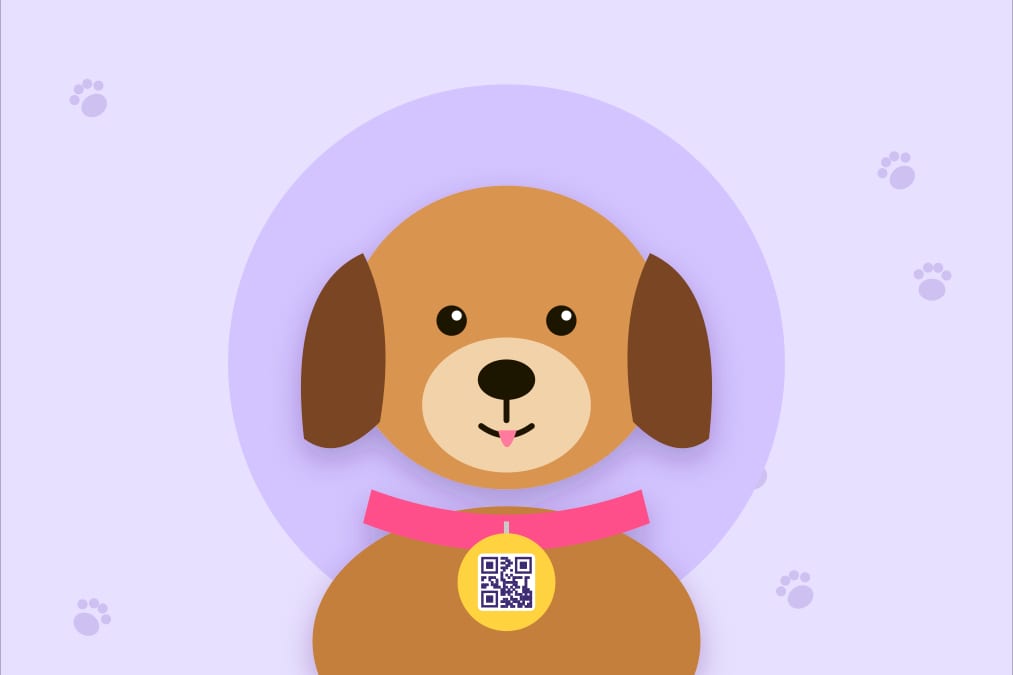
A dog that slips out of the gate, a cat that does not come home, a leash that breaks in the park. When a pet gets lost, the person who finds it usually wants to help but has no idea who to call. What is on the collar in that moment makes all the difference.
This guide covers what a good pet ID tag should say, how a QR tag works, what to do in the first hours after a pet goes missing, and how to be reachable without engraving your phone number on a piece of metal.
What a pet ID tag should include
- The pet's name, so the finder can call it and calm it down.
- A way to contact you that works at any time.
- Important health notes, if any: "needs medication", "deaf", "do not feed".
A tag is not a replacement for a microchip. The chip is read by vets and shelters; the tag is for the neighbour who finds your dog on the corner and wants to call you right now. Ideally your pet has both.
The problem with engraving your phone number
An engraved number is simple, but it has drawbacks. Anyone who sees your pet can read it, the engraving wears off, and if you change your number the tag becomes useless. Some owners also prefer not to make their personal number public on something that spends every day in parks and streets.
How a QR pet tag works
A QR tag carries a code instead of your number. Whoever finds your pet scans it with their phone camera and a page opens where they can video-call you or send a chat message. You receive it on your phone like a call. They do not need to install an app, and they never see your number.
- Video call: you can see your pet and the place where it is, which makes it much easier to recognize the area.
- Chat: if you cannot answer, the finder can write where they are.
- Several people can answer: share it with your family so whoever is free picks up.
- Control: you can block someone, pause the tag or set quiet hours.
Tip: next to the QR, add a short line such as "If I'm lost, scan me" and the pet's name. Some finders do not think of scanning unless they are told to.
How to make a durable QR tag
- Create the doorbell for your pet and give it the pet's name.
- Print the QR in a small, high-contrast size, and laminate it or put it inside a waterproof tag holder.
- Attach it firmly to the collar or harness, where the code stays flat and visible.
- Scan it from another phone to check that it works before your pet wears it.
- Check it every few weeks: a scratched or faded code should be replaced.
If your pet gets lost: the first hours
- Search nearby right away, calling its name, with a treat or a toy it knows. Many pets stay close or hide.
- Tell your neighbours and your building or community group, with a recent photo.
- Contact local vets and shelters and give them the description and the microchip number if it has one.
- Post in local lost-pet groups with a clear photo, the area and the date.
- Put up posters in the area. A QR on the poster also lets people call you without seeing your number.
- Keep your phone on and charged, and make sure the tag notifications reach you.
Get the call without giving out your phone number
When you post a lost pet, your number tends to end up everywhere: social media, posters, groups. Most people are kind, but some will use it for spam or scams. With a QR tag and a QR on your posters, everyone who has real information can reach you through the doorbell, and your number stays private. When the pet is home, you simply pause the doorbell for the posters.
When you find someone else's pet
The same tips work the other way round. If you find a lost dog or cat, approach slowly and speak calmly; a scared animal may run or bite. Look at the collar for a tag or a QR code and scan it: the owner may be looking for it right now. If there is no tag, ask nearby neighbours, take it to a vet or a shelter to read the microchip, and post a photo in local groups with the place where you found it. Avoid giving the animal to someone who cannot describe it or show a photo of it. Thanks to people who stop and help, many lost pets are back home the same day.
Frequently asked questions
Does the finder need an app?
No. They scan the code with the phone camera and the call opens in the browser.
Does a QR tag replace a microchip?
No. They complement each other: the chip is read at the vet or shelter, the tag works on the street.
Does it work for cats?
Yes, with a light breakaway collar and a small tag.
Does it cost anything?
You can start for free; the free plan shows ads. Paid plans add extras such as more call minutes.
Conclusion
The best time to prepare for a lost pet is before it happens. A clear tag with the pet's name and a QR code gives anyone who finds it an instant way to call you, without exposing your number. Create your pet's free QR tag and put it on the collar today.